On Taking Up Space
Maybe I’m afraid of his solidness.
Unit: Measuring Volume by Displacement
Lesson 1: Everything is either a solid, liquid, or gas.
Mrs. Klein shifts from one sensibly shoed foot to another. She turns and writes “volume” in loopy script on the blackboard under the laminated “Mrs. Klein’s 5th Grade” banner. Plastic cylinders and a rainbow of objects we’ve used for math exercises line a round table. She has planned this lesson carefully, a repeat of last year and the year before.
I am poised with pencil in hand. Brandon, the boy who sits across from me, kicks my shin. I let out a yelp. He smiles wide enough to show me his canines.
Mrs. Klein lofts her rehearsed opening question over Brandon and I: “How would you measure this bear’s height, length, and width to measure it’s volume?” She holds the yellow plastic bear in question between her index finger and thumb, turning it over as if she’s never seen it before.
Brandon turns his attention from me and yells out a guess: “A ruler!”
Mrs. Klein picks up the ruler she set up in reach and attempts to measure the bear
“Look at all the irregular sides! My ruler isn’t getting all the little curves of it’s belly and ears. What else class?”
Rachel, who sits in the back and zips and unzips her glitter pencil bag, guesses: “Ask an adult?”
“Yes, Rachel. Sometimes that is a good solution to a problem. But how would you measure this bear?”
Sadie, who’s light up tennis shoes I covet, guesses: “You could look it up!”
“That might be possible, if we had the right information, but today we will learn how we can measure the volume of any irregular object.”
Rachel always suggests asking an adult. I heard her dad works at city hall. Since we started doing dictionary drills, Sadie always thinks we can find the answer in the dictionaries we keep under our desk. Even Brandon’s reasonable answer is wrong.
This is how Mrs. Klein begins every new unit.
Lesson 2: A solid holds its shape. Liquid takes the shape of its container.
Mrs. Klein begins to distribute a single sheet of misaligned copies. The word “NAME:” is half missing at the top left. I write my name in tiny print so it will fit on the line next to it.
“Today, we will be dropping these cute little bears into cylinders filled with water and logging measurements of the water before and after. The difference will be the exact mass of the object. This way we will be able to measure our bears without using a ruler or measuring tape!”
Brandon kicks me again before he realizes Mrs. Klein is approaching behind him with the materials for our two person table. I turn toward her and silently plead that she will see what’s happening before I have to say anything.
She takes my gaze as appropriate attention to begin her sequence of instructions.
“Ok Table 3. You have a cylinder of water, two bears, and your worksheet. Do not move the cylinder from the paper towel I’ve put it on. Follow along on your worksheet. Brandon, don’t forget to write your name.”
She’s turning to move on. A panic is rising in my throat.
“Mrs. Klein, Brandon kicked me.”
She spins back around to face us. Brandon sulks. This isn’t a new accusation, but it is the first from Table 3.
Last week Mrs. Klein separated our tables of four into tables of two. After we’d settled into our new seats, she lead us in a call and response of the class rules printed on the wall next to the window.
I WILL BE RESPECTFUL. Iwillberespectful.
I WILL ALWAYS DO MY BEST. Iwillalwaysdomybest.
I WILL RAISE MY HAND. Iwillraisemyhand.
I WILL KEEP MY HANDS TO MYSELF. Iwillkeepmyhandstomyself.
Now, at Table 3, she issues a repeat of a dozen times before. It is a half hearted, “Brandon. Keep your hands and feet to yourself.” She moves on to Table 4.
Lesson 3: All objects take up space. The measure of this space is an objects volume.
Brandon and I write down 1.3 on the line next to BEGINNING WATER. He drops the bear in and the water molds around it. Brandon pulls the cylinder toward him, situating the hexagonal base halfway off the paper towel.
“1.7!”
We write 1.7 next to WATER WITH 1 BEAR.
Mrs. Klein issues a reminder from the back of the class, her tone as regular and clear as a church bell. “Remember our states of matter we learned? What state of matter is the water? What state of matter is the bear?”
Her reminders correlate to questions at the bottom of the worksheet. I write down my answers in silence.
What state of matter is the water in the cylinder? liquid
What state of matter is the bear? solid
“Hey”
Brandon taps my desk with the end of his pencil. He’s torn off the eraser and bitten the metal to a point.
“What are you writing? You’re skipping.”
I erase my answers. He drops another bear into the cylinder from an inch above the opening. The bear knocks the side of the plastic with a soft thoink before splashing into the water. I watch the water rise dangerously close to the top.
Brandon brings the cylinder off the paper towel to look at it closer.
“It’s at 2.1” he says confidently.
He writes 2.1 next to WATER WITH 2 BEARS. I write the same.
Lesson 4: Measure the volume of a solid object by measuring its ability to displace liquid.
We are back to the section on states of matter. I retrace my previous answers carefully. Brandon kicks me again. I don’t look at Brandon.
“The first one is liquid and the second one is solid.”
Maybe I’m confused. I’m not entirely sure my answers are right enough to be on both our papers. I’m always remembering the sting of the red mark.
Maybe I’m embarrassed. Based on what I know, he either really hates me or like-likes me. Both are equally embarrassing.
Maybe I’m afraid. Not for my safety but of a social scenario, a boy, a confrontation.
Maybe I’m afraid of his solidness.
I hook my feet around the metal chair legs. The downy hair on my ankles bristle against the cool. I read the next section out loud.
“THINK: Why does the water rise when the bears are added?”
Brandon looks at me expectantly. I don’t look at Brandon. I begin to write. The bears are solid and the water is liquid.
Brandon swings his legs moving the air under my desk. I wind my legs tighter around the chair.
“What are you writing?”
I turn my paper toward him and pick up the cylinder to put it back on the paper towel. It leaves a wet ring on the faux wood.
He writes my answer carefully. He spins my paper back to me, catching the corner in the water.
Brandon shoots up his hand and twists to find Mrs. Klein.
“We’re done!! We finished!”
Mrs. Klein stands behind him and moves an uncapped purple pen down his page.
Check. Check. Check. Check.
She flips the page over. Another set of questions run down the page. I flip my page over. The page too thin to read in the soggy spot.
“You have quite a ways to go, Brandon. You know the states of matter, that’s good, now we need to get back to measuring that bear.”
She pivots over my desk and turns my page back over.
“Be careful with the water. You won’t get another worksheet, Allison.”
She marks four purple checks and walks back to her desk.
I untuck my legs and sit side saddle on my chair. Two pink marks bisect my shins.
Brandon leans back in his chair and taps a kid behind him. I can only see the back of his head but from his audience’s stifled laugh I can tell Brandon is making a face.
Brandon turns back to me. He’s folded his eyelids so the pink shows in a small crescent above each pupil. I turn my lips into a smile. I am afraid of Brandon.
I rewind my feet around the chair legs and read the next question silently.
IN YOUR OWN WORDS: What does it mean for liquid to be “displaced”?
I write:
Liquid moves because of the solid.

Love Letter #3 - Let go of stories that don’t serve you.
What used to sound wise now sounds scared and small. It’s time to let what doesn’t serve you go.
As a keeper of journals, I sometimes go back and skim the monologues of my recent-past self. What I find at turns delights me (I was so worried about that and now look how it all turned out!), bores me (Good God, how many times can you say “he’s so great”?), and makes me want to burn the whole journal out of embarrassment. So many pages are crowded with observations and theories that, at the time, I thought were so wise, narratives that seemed to explain situations, people, pain. Now they just strike me as defensive and small. Here are a few that I’m ready to let go.
“This can’t last”
There is a difference between being in touch with the temporality of things and reveling in it. We get it. All things come to an end. We all meet the same fate and leave this world like we entered it blah blah blah. But allowing this fact to rob you of joy is really just a way to check out of feeling something other than the shame and sadness we’ve all cultivated comfortable brain patterns around.
I noticed that when things were going well, I felt the need to puncture the good feeling with “rational” thoughts like something bad is bound to happen and my luck will run out. I have pages dedicated to all the ways this particular joy will end. Call it negative rumination. Call it performative pessimism. Call it Debbie Downer-ing my own life. I’m letting go of anticipating the worst in order to be right.
“They are just ______”
….assholes…..selfish….using me…..
What begins as a healthy does this person have my best intentions at heart/are they being honest/etc quickly becomes a game of personality Clue in which I try desperately to figure out the motive and means of someone before they hurt me. (Listen, my intuitiveness can easily be highjacked by anxiety and defensiveness. We’re all riding our own horses, ok?)
Having someone figured out meant that I could opt out of continuing to be open, move into a defensive formation, and start searching for confirmation of my assessment. If I was afraid a new boyfriend would break my heart, I’d dismiss him as a fuckboi and look for ways he wasn’t worth it or ways he was already pulling away. If a friend’s success made me insecure, I’d categorize her as full of themselves and find ways they acted too good for my company. This analysis was separate from reality (the bf is great, the friend loves me, etc), but this stance of having “figured them out” was an easy way to protect myself from imagined future hurt by keeping them at a distance.
(Side note: this has worked both ways. I’ve brushed off red flags from people because I was so wrapped up in successfully navigating their toxic behaviors. I had them figured out: they didn’t actually intend any harm when they were mean, they were just immature, obviously. )
“All my emotions are interconnected and require a narrative.”
My first round of therapy left me with a few overarching narratives that helped me understand my behavior. One of them was something like, “I didn’t get enough approval from my parents therefore I seek it from others in my adult life.” For a time, this narrative seems to explain everything about me.
Why am I so upset about that joke my coworker made? Oh, it’s because I’m seeking the approval I didn’t get from my parents.
Why did I snap at my friend? Probably because I’m seeking her approval and she’s not giving it to me.
Why did that tv show make me cry? Well, you know, I’m continually seeking the approval I didn’t feel as a child. (Ok, in the case of Parenthood this actually ~always~ tracks.)
But not every passing feeling belongs in the narrative. Some emotions are just because we’re tired or hungry or emotional, not just because we’re triggered by some deep emotional thread. Hear me out: knowing the nature of your original wounds is very key to self-love. And feeling your feelings is incredibly important. Stuffing them down only makes them fester. But feeling them and thinking about them are two very different things.
Analyzing every single emotion is like trying to measure every single wave that comes in to shore. My job isn’t to know the height, speed, and density of each wave. It might be to pay attention enough to know when hurricanes or tsunamis are happening. But really my job simply to swim.
My journals tell me that I used to think all of these stories were incredibly wise. They seem sad and small now, as I’m sure the journal entry I wrote this morning will feel in a few months. But by then, I’ll be a little different, a little stronger, a little wiser.
I hope you’re letting go of the stories that don’t serve you.
much love,
all.is.on.

Love Letter #2: Decisions
on being the authority on your own life
Hey you,
I’m listening to Bennie and the Jets on repeat and rereading the compatibility star chart that cost me $0.99. I wish I could explain these things in a way that would make me sound less millennial-cat-lady-with-no-cats and more cool-girl-with-interesitng-quirks, but who am I kidding. I am quickly becoming your favorite aunt who you only see at Christmas but will send you inspiring notes on locally made paper when you need them. Imagine this text is written in scented purple ink. (And tell Aunt Carol that we are still on for the outlet mall.)
When I decided to move to New York, I fielded questions for months about my move. People asked about jobs, apartments, U-Hauls, money, etc. The inquiries were good-hearted but they usually ended the same. The person would shake their head in disbelief and say, “I could never do that.”
This assessment made me feel like a dumb ten-year-old choosing a life path based on Monopoly rules. These people I knew and loved, people who knew me, couldn’t possibly imagine making the same decision. They questioned the reasons for my decision and found them lacking. They stoked a fear inside me that I shouldn’t be the one making this decision.
This thinking began long before I decided to move. My entire life I’d relied on a kind of consensus model of decision making. I tried to take stock of what my family, friends, enemies, teachers, boyfriends would do in any given situation. I’d choose the thing that seemed like it would garner the most approval across the board. I applied for safe colleges. I got a safe job. I began a safe life built on the approval of others. But ignoring my own aspirations, feelings, and desires didn’t make them go away. They brewed there in a deep part of my belly for years before finally ripping my life at the seams.
I made the decision to move to New York on a gut feeling. It wasn’t based on any kind rational reason. I didn’t have a job lined up. I didn’t know anything about finding an apartment. I’d never even been to New York. On the outside, it was impulsive. But it was based on a feeling so strong that it swept me up like a wave and carried me to the point of no return. Suddenly I faced the subtle disapproval of the counsel I’d diligently followed my entire life.
Between heaving sobs, I told my therapist my fears. If people said I could never, did that mean I couldn’t either? Did that mean I shouldn’t? Did that mean they disapproved? Was I making a huge mistake?
When I finally had to pause to breathe, she handed me a third tissue and said, “you are the most qualified person to make decisions about your life.”
I laughed out loud.
Qualified? I’m barely qualified to rent a car! I’m still in shock that people let me eat and drink whatever I want! Last night I ate a 2-minute mug brownie for dinner! FOR DINNER. At best, I’m pretending to be an adult!
I quietly discredited her statement as bullshit and ate my weekly post-therapy burrito thinking instead about how much I hated everyone.
But the next time I talked to someone whose well-intentioned questions felt like an attempt to poke holes in my sail, I thought about all the ways I knew me better than they knew me.
It became easier to discern which comments were about me and which ones were about the person commenting. I was able to read “I could never” at face value instead of some veiled disapproval. Their alarm at my moving without a job was easily countered by my excitement about seeing what was out there. Their disgust at my chosen city’s trash or crime or lack of Walmarts was easily mitigated by my interest in a different kind of life. Their I could never’s were quietly countered with a yeah, but I can.
The sentiment has become a mantra to me. As I move through this life making big and small, smart and dumb, lasting and temporary decisions, I know that I am the best person to do so. Friends, therapists, parents, partners do know me and I still highly value what they see. They help me see sides of myself that are in blind spots. They can bring me back from the dark parts of my psyche. But in the end they can never have the same knowledge I have from living my entire life as me.
When I start to doubt or think that someone else’s advice has more weight than what I think or want, I return to the list of things that are wholly my own, things that, no matter how hard I try, can’t be explained or understood by another person. The journals filled with words that only I’ve read. The long afternoons of my childhood. The way the smell of Ivory soap makes me feel both comforted and nostalgic. The irrepressible and acute sadness (read: angst) of my 15 year old self.
Others know individual parts of me but I am the only one who knows the sum of all of these parts. I am the only one on earth who can discern what it means to be me. I am the most qualified person to make decisions about my life.
And so are you.
Listen to yourself. You know what you’re talking about.
Much love,
all. is. on.
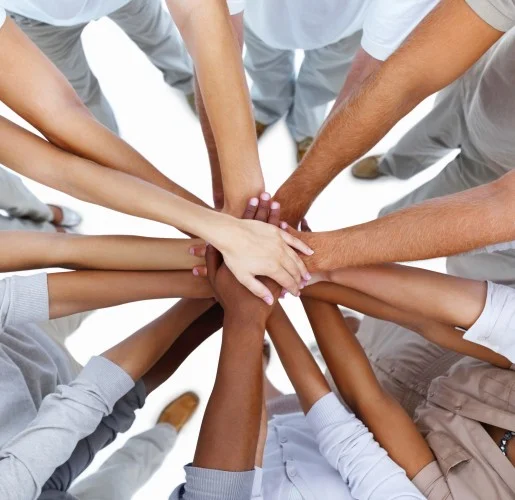
bring it in for a "Team Feminist" huddle
There’s really nothing like hearing women give a preamble to another woman.
On a recent sunny Saturday, I sat in crowded, hip Brooklyn restaurant next to a table of women with one empty seat. There was a joiner to their party that half the women didn’t know. The two that already knew the joiner set to filling the others in on the mystery friend.
“Well, she’s… I mean. You know Allison. She just kind of does what she wants.”
“Remember that time in Mexico?”
Those that don’t know Allison perk up at the pregnant pause. The two friends of Allison nod knowingly.
“It’s a long story but she just went a little crazy. She took someone home and when we confronted her about it she acted like she didn’t care. She just does whatever she wants.”
“Was it a guy or a girl? I mean, I don’t care. Good for her, you know. But...”
After they spent five more minutes talking shit about their friend, these women went on to talk about primary elections, their busy jobs, the immigration crisis. These were smart women. All of them, I’d guess, would gladly claim feminism. But this tone they were using, the same tone we sometimes talk about other women, has a flavor of disapproval, disdain even, that smacks of misogyny.
Here’s the thing. We all are coded to believe the lies society tells us about gender, sex, race, etc. We (should) work consciously to seek the truth about these issues. But the undoing of indoctrinated damage requires fine tuning and a lot of practice.
In recent years, labelling someone a “bad feminist” seemed to do more harm than good. (Why nitpick those who claim to be on our team while the enemy remains at large?) But these women at the restaurant were being bad feminists. Sometimes I’m a bad feminist. And not in the Roxane Gay kind of bad feminist who falls short of the impossible expectations of feminist culture. But a destructive or misinformed kind of practice of feminism. It’s worth an attempt at outlining what we still get wrong so we can get more right. Consider this a quick practice for team feminism.
Alright, team, let's HER BODY HER CHOICE on three. One. Two. Three. HER BODY HER CHOICE!
Now let's get to it.
You might be a bad feminist…
….if you disapprove when a women doing something different/doing whatever she wants.
Despite our best efforts to create and understand different life paths, we love shitting on women who take an alternative one or take many different ones within a lifetime. This comes from a desire to have our own life path affirmed in its normality and rightness, but so often we step on others to justify ourselves. Can women make stupid life choices? Of course. Can we judge these? Sure, I guess. But there is a difference between disapproving of the choice itself and disapproving of a person’s ability to make a choice. Women are rarely allowed to be the authority on their own lives. Don’t assign value to another person’s decisions. Chances are, they know more about their life than you do.
If you think you could live another woman’s life better than she can, you’re in bad feminist territory.
…if you have beef because your friend’s gender presentation or sexual orientation has changed since you’ve known them and you just can’t keep up.
We’re not being good friends if we can’t keep up with things that are central to our friends’ identities. We remember if a friend changed their last name. We remember their birthday. We remember all their exes and warn them when they are going to be somewhere. A reluctance to accept a change in gender performance or preference is a snag in the fabric of a friendship and practice of feminism. When people publicly change their markers it often comes after years of experience, thought, emotion.
It’s not that complicated to be clear on someone’s current identity.
…if you’re annoyed someone always makes it about race.
If I’ve learned one thing from this Dumpster Fire Era(™) it’s that it is almost always about race. To be good friends, we need to empathize, especially when a story isn’t similar to ours. Considering how race plays into marginalization based on gender is key to good feminism. Fellow white women, we’ve got to work to make our feminism intersectional and thank our friends of color for sharing with (and educating) us.
It’s not their responsibility to make us woke.
…if you wish someone was less ~HiGh mAiNtEnAnCe~
It doesn’t matter for who or why they are presenting themselves a certain way. It does matter that we accept the expression. We’re not empowering* anyone by telling them how to look even if we feel we are righteously freeing them from an enslavement to the male gaze. We can’t use the same logic of oppression (there is a right way and wrong way to look like a woman) and expect change. Also, it’s a function of privilege to be accepted in society with low maintenance. Let ‘em Kardashian kontor, extend their eyelashes, boost their booty. You can’t tell a feminist by her makeup.
If you find yourself telling someone how they must look to be a feminist, you’re doing it wrong.
*blows whistle*
Alright. Good practice team. We’re passing the ball, we’re making good use of playing time, we’re working as a unit. Now, when we go up against Cis-Straight-White-Dude High next week, we will BURN THEM TO THE GROUND.

*I have an issue with “empowerment.” Empowerment is the kid sister to power. I’m tired of being happy for society ~empowering~ women. Why don’t we give women actual power? (Register to vote here.)

Love Letter #1: The Slog
There are days that this comes easier. (It’s ok that today isn’t that day.)
Hey you.
I’m listening to this disco playlist and feeling v smug. I wrapped up two pieces I’ve been working on, did yoga on my roof, ate a salad for lunch. *flexes* But let me tell you about yesterday…
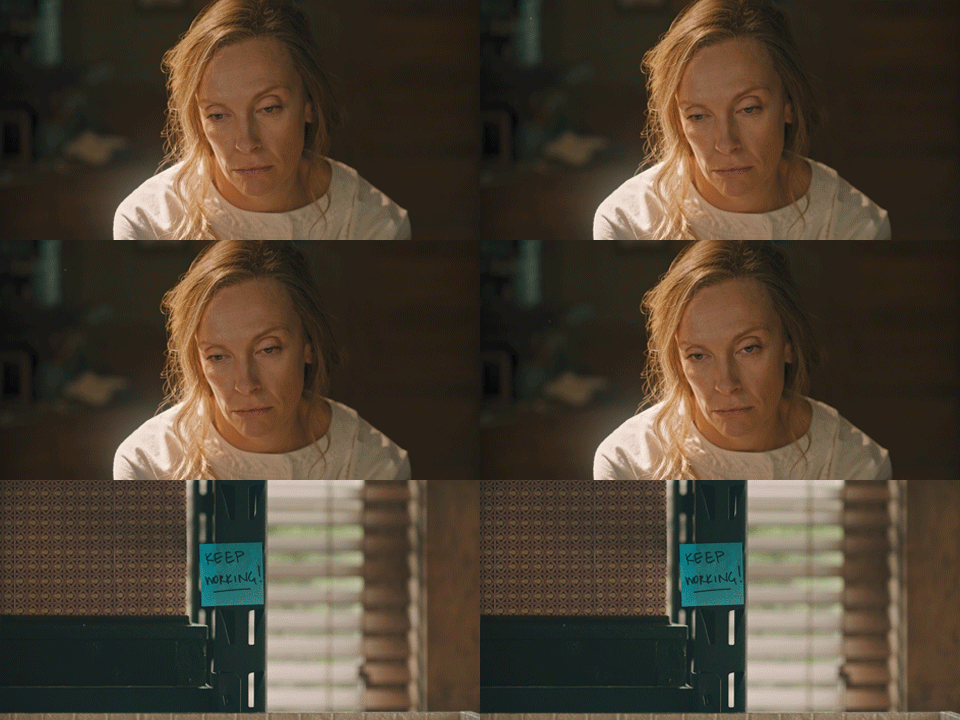
Yesterday was one of those days where I felt like Toni Collette in Hereditary. Nothing was making sense, every lead of progress just made things much worse, and my forehead hurt from banging it so hard on my desk. (Well, she did that upside down and on the ceiling, but we were both wrestling with demons!)
I spiraled from a rejection from an editor. I changed the direction of an article I was working on that now requires a whole other set of research. I stared at a cursor until it felt like the void and when I did write something it was deleted minutes later. Just a fucking slog. You know the type.
As I sat there, head propped on elbow, vacant look on my face, I longed for those days where writing felt easy. I wrote myself this little love note and stuck it above my desk. (At any point my workspace is littered with these. I’m like one structured dress or breakdown away from being Mary Jane.) I did what I could. I showed up, I banged my head against the wall, I still did the thing. At the end of the day did my best to not count it as a wash or beat myself up. (also a la Hereditary)

And, as if by magic, today was one of those days it was easier.
Life is long. Days are short. Keep showing up.
Much love,
all. is. on.
P.S. Yesterday wasn’t a total waste because during my research I did find this video. Enjoy bbys.
Volume: On Taking Up Space
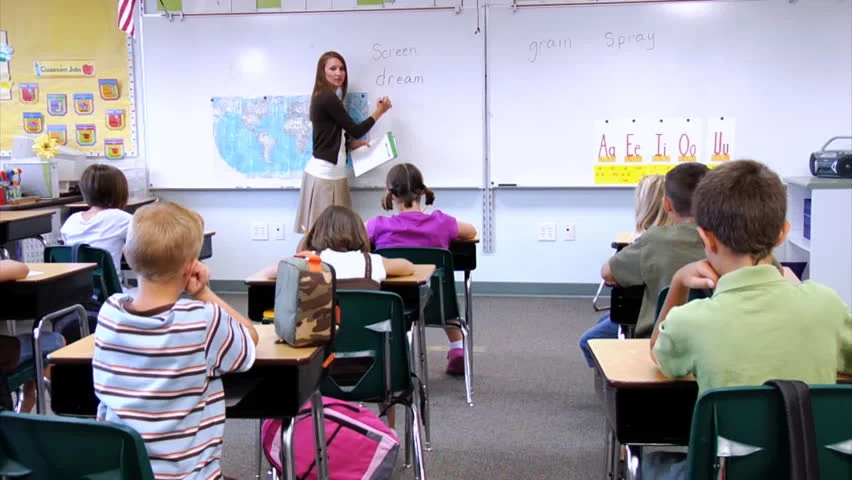
All elementary school science teachers introduce the concept volume the same way.
All elementary school science teachers introduce the concept volume the same way. They fill plastic cylinders halfway with water and instruct their students to record the measurement of the water. Then they ask, “how would we find the volume of something that isn’t liquid?” Because their students haven’t mastered the finer points of multiplication and dimension, their goal isn’t a complicated equation but a simpler method. The students wonder, theorize, and attempt to answer until the teacher brings out the piece de resistance: the objects.
These are typically the same hard plastic objects they used to learn to add and subtract, differing combinations of tiny blue cubes, (the kind that come in single cubes, fused until of ten or a hundred) the rainbow of tangrams, and colorful little bears. They instruct their students to drop their chosen object into the water in front of them. The students do so with glee. Then with grubby hands and fat pencils, they measure the water again. To their surprise, the water has risen. Their teacher assures them, this is the measurement of the volume of the object. The goal of this lesson is simple but effective: to understand that objects take up space and that that space is measurable.
The boy who sat across from me in science class when I did the volume experiment had a history of kicking kids under his desk. He was a terror who left the knees of his victims bruised. The teacher knew it, the students knew it, and I knew it from experience. After being kicked multiple times and having my complaints brushed off by Mrs. Klein, I solved my problem by folding my legs in configurations that made them untouchable. I’d wrap them around the legs of my desk. I’d hike them up into my book holder. I’d sit cross-legged in my chair. I didn’t complain anymore.
I doubt Mrs. Klein knew she was starting a process of folding and compacting when she half-heartedly scolded the desk-kicker. The way we learn about how to behave is never in the ways that mature people, adults would like us to. But by the time we have the words to describe the real problem we are already trained to find the comfortable spot sitting on our heels.
I often envy the people who seem to unapologetically take up space. I have a coworker who is somehow always in the way and somehow always unapologetic. He stands in the door way of a busy kitchen and forces you to ask him to get out of your way. Then, if you’re ever caught in his path, he gives you about a half second warning before he puts his hand on your back and directs you out of his way.
The thing about this guy is that the world just molds around him. I avoid him and being in his way. I change where I stand so that he can’t run into me. I’d rather change than to deal with is obtuseness. He is the hard plastic bear and the rest of the world is the water.
As an adult I am having to learn that I deserve to take up space. I have a body and this is it’s size. I try not to think too much about having to push past people to get off a crowed subway. I try not to take my coworkers herding personally. I have to force myself to move around my tiny kitchen when one of my roommates is also there. I am slowly, slowly unfolding the neat creases I’ve put in myself.
To take up space is to believe that you matter, that you matter enough for your matter to be measured. But a lot of us are not hard, plastic toys. While we are learning how to measure how much a person matters, we are so soft and moldable. It is much easier to fold yourself inward so much that you’re untouchable rather than suffer perpetually bruised knees.

Why Hillary Clinton Won't Win the Presidential Debate
Hillary’s presence on the debate stage isn’t just a novelty, it is a questioning of some of our most inner biases.
We don’t like women’s voices for a lot of reasons. They’re not low enough. They’re not intimidating enough. They’re not powerful enough. They’re not even processed by the same parts of our brain. But even if a woman makes it to a platform where her voice is heard (literally), that platform is already slanted against her.
We police women’s voices until we can hardly hear what they have to say. Take vocal fry, the “epidemic” sweeping over millennial women and NPR podcasters alike. Those who spoke with vocal fry were thought to be less authoritative and intelligent, while the Ira Glasses’ of the world continued to be heard without listener complaint, vocal fry and all. Despite what we like to think about our progress, our expectations of how people should talk are surprisingly gendered and still put women, especially powerful ones, in an impossible bind.
For the first time in history, these expectations are playing out on a grand stage in the 2016 presidential election. For the first time there is a woman nominee, and on September 24, that woman nominee will debate yet another male nominee, and our unconscious biases could mean a hell of a lot more than liking a podcaster.
So what do we expect out of Hillary and Trump?
On the surface, our expectations aren’t surprising. We expect women to communicate gently, emotionally, warmly. We expect men to communicate forcefully, confidently, and (if necessary) angrily. Hillary has got to be relatable, whatever the hell that means, while Trump simply has to seem powerful. And when they break these communication expectations? We hate them for it. If Trump speaks in a way that conveys too much ~feminine~ emotion (like remorse, compassion, understanding), we might read him as weak, as unfit for such a role as commander-in-chief. If Hillary speaks too confidently, too forcefully, or with any ounce of anger, we see her as untrustworthy and calculating.
The strange media coverage of the election seems to work largely on this point. Hillary’s big fuck up, her e-mails, keeps coming back despite various reports, sources, and committees who have found that she did nothing unlawful. People fault her for not being apologetic enough. More than a year after her initial statement of apology she issued the following statement: “… there are no excuses. I want people to know that the decision to have a single account was mine. I take responsibility for it. I apologize for it.” This still has not satisfied those out for some real remorse from Clinton. Meanwhile, Trump continues to make claims that are so outrageous that we can’t even tell if he said it or Kanye West. To account for some of his offensive missteps he’s said: “Sometimes, in the heat of debate and speaking on a multitude of issues, you don’t choose the right words or you say the wrong thing. I have done that……” The “apology” that he issued isn’t an apology at all but an evasion of the remorse that Clinton takes on and, even worse, he continues by ordering to the listener to move on to the issues that have more “at stake.”
These are the biases we are well aware of. So why are we still listening to Trump? There's more at play.
His speech has a clear and well worn avenue of communication. People get that when he’s angry, it’s for a good reason (in his eyes). People get that even though he makes mistakes, he is still (somehow) a viable choice for the presidency. Hillary does not have that privilege. She’s got to prove that any sliver of anger is justified. She’s got to apologize for her mistakes and for her husband’s. She’s got to prove she’s a viable choice for the presidency because people just don’t trust her.
Even if you’re not in the basket of deplorables, you are unconsciously judging Hillary and Trump based on their gender.
The way we are socialized from a very young age plays into this. Kick-ass linguist and personal hero, Deborah Tannen, conducted research with elementary aged groups of boys and girls and found that they use language for very different purposes. (You can find a good video of her talking about it here.) In her study, the groups of girls talked to each other in ways that emphasized their connection, some even going so far as to mimic her friends incorrect syntax. She found that the groups of boys used their language to convey status. The boys continually one up each other until the round is “won” by one of the speakers. Men are coming to the same conversation “looking at a different axis.” But this axis is the one we’ve used to build our world, including the models for governing it.
If you watched any of the primaries, you know that a debate with 12 people on stage is essentially a yelling match, and the fact that you get time to respond if someone says your name makes it so, if people are trying to take you down a peg, you have air time to bring yourself back up. The axis that these rules are made on favor the model of speaking the boys in Tannen’s research used.
In these upcoming debates, the odds are stacked against Hillary. This isn’t because of her experience, her demeanor, or even her basic speaking ability. The odds are stacked against her because she wasn’t socialized to use language in the same way the boys were and we aren’t socialized to listen to her even if she did.
Think about it this way: Trump talks like a grumpy, temperamental dad. At worst, he’s bigoted, incoherent, racist, sexist, etc. So maybe he is a really drunk, temperamental dad. But we’ve had all kinds of dads as our president. We’ve had the cool dad that let’s you smoke pot when you’re 18. We’ve had the ignorant dad who doesn’t realize you’re sneaking out of the house and hates all your boyfriends. We’ve had the dad who’s into younger women. Trump gets a leg up because he is like our presidents in ways that Hillary never can be. Trump doesn’t have to say anything intelligent, he just has to sound like the other dudes who said intelligent stuff before him. But we’ve never heard a woman speak on this level before.
Hillary can’t “win” this debate in the way that other candidates have won debates. Other candidates have “won” by following the rules of a debate: top the other candidate until the round is won. This is how a presidency is eventually won. But girls have never been allowed to play by these rules. Until now, they weren’t even allowed in the game.
Hillary’s presence on the debate stage isn’t just a novelty, it is a questioning of some of our most inner biases. The rules of the game aren’t changing before the debates start, but the spectators can try and listen a little closer.

Notes on Self Care
Self care is important. So important that a huge chunk of the internet for ~ladies~ is consumed by the idea. But the proposition of taking care of yourself isn't as easy as an at-home-spa day.
Self care is important. So important that a huge chunk of the internet for ~ladies~ is consumed by the idea. But the proposition of taking care of yourself isn't as easy as an at-home-spa day.
The idea of taking care of yourself is a radical one. For many women, and for women of color and of the working class especially, the proposition of taking time out of the 24 hours for yourself is deemed excessive, selfish, unnecessary. Women are working to support themselves and their children and many are pulling second shifts in their homes. Simply, their time is valuable and a woman's value still comes from serving others (children, partners, communities, etc). This means that a woman's needs are often second to all. Why on earth would we be obsessed with this idea of self care if it wasn't?
The definition of self care is often misconstrued as necessitating some kind of luxury or the luxury of doing nothing. Self care is not about Netflix binges. It is about the essential upkeep of your psyche. It's the process of taking care of yourself. It should leave you with more than just nice nails. Here are some essentials of self care that you can fold into your current routine or use as a guide to start a new one.
1. Taking care of yourself isn't always fun or relaxing.
me realizing this. still mad about it tbh.
Netflix binges are great, and watching a tv show could be part of your self care, but for years I mistook the relaxation of diving into a binge as self care. I would watch as many episodes as my eyes could handle but I wouldn't feel any more cared for. I felt less stressed sure, but there were things in my life that still needed doing, the things that stressed me out in the first place.
What I didn't realize at the time is that self care is not only about relaxation, it's about taking care of yourself as if you were someone else. When you go over to take care of a sick friend, you don't just watch a million episodes of SVU. You bring soup, you do dishes if they're dirty, you make sure that their needs are met. In self care you have to do the same thing. Do you have food available that makes you feel good? No? Go to the grocery store. Do you have clothes that are comfortable and make you feel good? No? Do your laundry. Is your space usable? Can't see the surface of your desk? Clean it. Try to give yourself the best support you can. Then you can rewatch all of Pretty Little Liars.
2. To take care of yourself, you have to know yourself.
Part of self care is bringing your brain to a better space. To do that you kind of have to know the beast you're dealing with. You need to know where you are before you can try to get to that positive place. Your self care may just be a matter of slathering on a face mask and taking a nap, but you need to know the rhythms of your self to really take care of yourself.
If you are the type (like myself) who often doubts her skills or worth, part of your self care should include reassuring yourself that you do have skills, that you are worthy of the path that you're on, that you are a person that people love. You may want to remind yourself of the positive ways that other people see you. If you're the type (like myself) to be stressed out by a messy space, then clean your space. If you feel yourself getting sick or irritable, you should stock up on soup and get some rest. (Yes, soup solves both sickness and irritation. Trust.) Think about what you're feeling, the things you may need to fill up on, and proceed in your self care in a more targeted way. If you don't know what you need, your self care routine (no matter how long or expensive) will not make you feel any better.
3. You have to be in a safe place to take care of yourself.
This is a tricky one. There is a hierarchy of needs and your base needs must be met before you can take care of yourself. If you don't feel safe or supported at a base level, there is no way you can care for yourself beyond survival. There are times in our lives when we feel attacked or in danger, and there are many people who are living in a constant state of trauma because of their otherness in our society. In these times, self care becomes infinitely harder. This is important to note because, on some levels, self care is a privilege. It is a privilege not only of time but of peace of mind.
To begin self care, you need to get to a place where you feel safe. Unfortunately, if you are seen as other by our society, those spaces are few. It's recently come to my attention that yoga studios, spas, parks, etc may not be a super safe option for everyone. If you feel like you're put in danger or even if you just feel like you're in a space don't belong, it is not going to be an environment where you can truly meet your own needs.
[Author's note: we should work a lot harder to make spaces safer and more welcoming for all people so that no one is limited when seeking the care they need.]
4. You must believe that you're worthy of love to engage in self care.
This is the most important piece of self care. When you are trying to meet your needs, you need to first recognize that you are worthy of love and care. If this is hard for you, try seeing yourself as separate from you. Objectively, I think we can all agree that everyone deserves love and care. Yes? So, you are a person in need of love and care. And you are in a unique position to give yourself the exact love and care that will make you feel supported and whole. What an awesome thing!
Hope this supercharges your next self care time. Go treat yo self right. xoxo

Nice Girls Never Win: How Taylor Swift Got Caught in a Web We All Weave
"Oh what a tangled web we weave when first we practice to deceive"
"Oh what a tangled web we weave when first we practice to deceive"
While researching an insignificant topic for a paper that was really assigned to practice our cursive, I became transfixed on this quote in the margins of the page of a children’s encyclopedia. I wrote it down. I recited it to myself. I fixated my fourth grade brain on what on earth that little ditty could mean. I knew that “deceive” meant something like “lie,” but I couldn’t understand why or how someone would practice to deceive. I didn’t understand then that, for many women, the very act of being nice depends on this practice of deceptive web weaving. I didn’t understand that this web that holds things together for time will only entangles the weaver.
Success and the Need to be Nice
Taylor Swift is caught in one such tangled web. After being “exposed” by Kim Kardashian she pivoted her story to accommodate the new information and keep Kanye West in the wrong. But none of the twists of this feud have been about the truth. Every turn is about personas (Swift’s, West’s, and Kardashian’s), and Taylor Swift’s is becoming unsustainable. Swift’s plight, from top-of-her-game to put-in-her-place, is an all too familiar one for a girl who wants to be known as nice.
First, a note on success: I refuse to believe that Taylor Swift is naive, stupid, or without control of her image. Like most famous artists, she has earned her success through a series of incredibly shrewd business moves and careful construction of a brand. Swift’s persona would never allow for an honest discussion of these aspects of her career, but there are there if you look past the red lipstick and instagram spam. The very brand that Swift and Co have created relies on Swift embodying the nice girl who’s defining characteristic is that she is likable.
Second, a note on being a nice: It’s not nice to say, “I got here because I worked my ass off.” Instead, nice girls say things like “I’m incredibly lucky” or “I couldn’t have done it without_____” It’s not nice to believe your work is better than others. Instead, nice girls show that they are just regular girls doing what came naturally to them. It’s not nice to keep a private, small circle of friends because it’s cliquey (read: bitchy). Instead, nice girls collect friends because everyone wants to be their friend and they’re so damn nice that they would never turn anyone away.
In this framework, Taylor could never speak specifically on what she had to do to earn an audition, a seat at the meeting, or control of her artistry. Taylor could never not like someone, unless that person was specifically and verifiably rude to her. Then, of course, not liking someone is justified. In this framework, Taylor must have a squad but can never support someone as controversial as Kanye West (even if she wanted to). To agree with Kanye when he is not being nice (i.e. calling Swift a bitch) means she may not be so nice. The web is tangled from the start because Taylor attempts to balance characteristics that are seen as mutually exclusive in our culture. You can’t be a nice girl and not be bothered by being called a bitch. You can’t be Taylor Swift and understand Kanye West. You can’t be nice and a shrewd business woman.
In short, nice girls can’t win.
Nice girls lose even at the project of being nice. If you’re unwilling to expose or identify your own flaws and risk being not-so-nice, don’t worry honey, we will do it for you. The more a young girl believes she is hot shit, the more the world is determined to show her she is not. Think about the differences between Anne Hathaway and Jennifer Lawrence. Nice girl who (understandably) downplays her flaws vs. relatable girl who revels in them. Think about every pop-princess who had to go through a “bad” phase to come out on the other side of her career. The world would never just let Britney Spears or Christina Aguilera continue to cook at their level of success forever without having some kind of break down or controversy (true or fictionalized). Without these carefully calculated persona changes, the every wave of the media’s fixation on flaws, breakdowns, and controversies would threaten the integrity of their nice girl persona.
Taylor Swift: the Unlikable Nice Girl
But Taylor Swift has been trying to do what Britney and Christina couldn’t. She has out grown the nice-girl pants but instead of ripping them off in favor of a red leather jumpsuit, she has declared that capris are in. The irony is that Taylor is trying desperately to continue to have “nice” as her defining characteristic at the expense of losing control of this persona.
We are uncomfortable with people whose one’s defining personality trait is that they are “nice.” Not long ago, some of the customers at my bar were discussing how a mutual acquaintance is just “nice.” That’s it. That’s all she was. And neither of them liked her. “If being nice is your whole thing, if that’s all that people can say about you, then there’s really not that much there.” The two couldn’t think of a single complaint about the girl but it didn’t matter. She kind of sucked.
This judgement is one we hear often about Swift. People can’t point to a certain reason why they don’t like her except that maybe she seems disingenuous. Hell, I’ve said that exact thing myself. What is really at the heart of all these complaints is that, despite dealing pretty exclusively in being nice, she is unlikeable. But there is always a rationale for this. People are obsessed with critiquing the authenticity of her niceness. (See some write ups here, here, and here.) It’s as if when they expose her they will be justified in their dislike for Swift.
Chuck Klosterman tried to explain this conundrum in a piece for Taylor’s first GQ cover, saying:
Over the past three years, Swift has built a volunteer army of high-profile friends, many of whom appear in her videos and serve as special guests at her concerts. In almost any other circumstance, this would be seen as a likable trait; Leonardo DiCaprio behaved similarly in the ’90s, and everyone thought it was awesome. But it’s somehow different when the hub of the wheel is Swift. People get skeptical.
Taylor has worked hard to be the nicest girl in the game. People can dislike her, they can believe she’s not talented, but they can’t say she’s not nice. Taylor’s nice girl persona was inevitably going to be cracked. No one can be that nice and that successful. No one can be that nice and likable. The previous assaults on her image have gained ammo from others, the media, Kanye, Apple music, etc., but this time the caller is inside the house. She has finally been tangled in her own twisted web, but let’s not forget why someone would first practice to deceive.
Somewhere along the line it was impressed upon Swift that, above all, she needed to be nice. You don’t catch flies with vinegar. You’ll sound bitchy if you are not nice. Sometimes if you’re not nice enough, people will turn malicious. Taylor’s story is not unusual.
At the same time I was reciting “what a tangled web we weave,” I was continually praised for being nice. I didn’t fight with my parents. I didn’t complain. I didn’t seem to have an opinion on people other than, “if they will be friends with me, then I will be friends with them!” My parents’ friends praised them on what a nice daughter they’d raised. I remember “nice” being a huge part of my identity from the time I was young.
It is only recently that I’ve realized I am not so nice. I have needs, wants, and opinions and sometimes those things aren’t “nice.” Sometimes they’re just true or important or necessary. For years I have bent over backward to remain a “nice girl” in spite of the essential paradox of also being a human. It turns out that the longer you try to be nice and the higher you prioritize that label, the more you become tangled in your own web of deception. Eventually the idea of meeting the requirements of being a nice girl require you to deny essential parts of yourself. Eventually the things you denied yourself at the cost of being nice bubble up and catch you in a tricky brand of self-deception that people love to hate in young women.
Taylor Swift doesn’t need our sympathy, but her story is a cautionary tale for all the nice girls out there. If you fall for the lie that you have to be nice, be prepared for people to do everything they can to ensure that you don’t win.